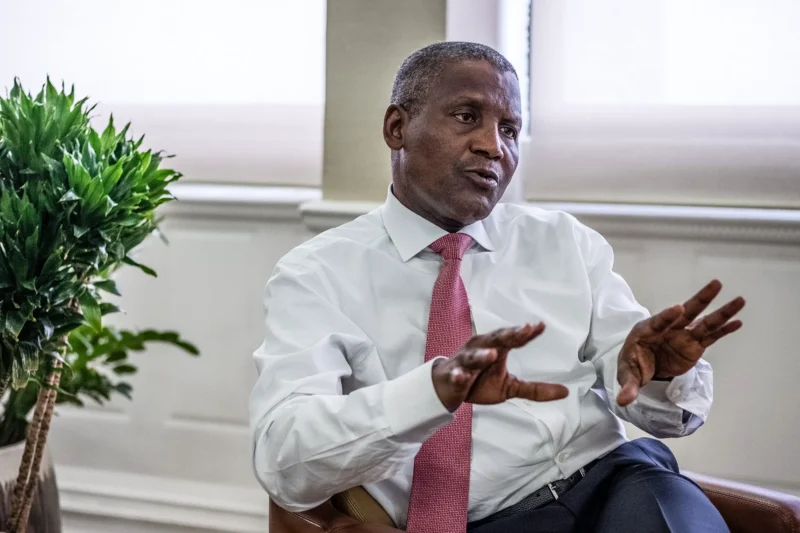
Aliko Dangote, President of the Dangote Group, has urged the de-escalation of the Middle East conflict following a meeting with President Bola Tinubu in Lagos, warning that prolonged hostilities threaten to exacerbate economic instability across Africa through sustained volatility in the global oil market.
The meeting, held on Monday, centred on the macroeconomic implications of the geopolitical crisis for Nigeria and the continent. Although Nigeria is not a party to the conflict, Dangote emphasised the inescapable reality of global economic interdependence, noting that Africa's limited fiscal buffers and high debt burdens leave it particularly vulnerable to external shocks in energy markets.
Warnings of Cascading Economic Hardship
Dangote articulated a stark scenario should the crisis persist, framing the situation as an external burden that African nations are ill-equipped to bear. He referenced previous commentary, stating that the continent is already preoccupied with debt servicing, and a new energy-driven cost shock would compound existing hardships for governments and citizens alike.
"If it doesn’t de-escalate, we’ll end up paying big prices... Africa is very busy paying debt, and putting this again on top of us is going to add a lot of hardship on people, on the government, on the people, on everybody, for something that we have no involvement in,"
He explained that energy costs underpin virtually every sector of the economy. Sustained increases, therefore, trigger a cascade effect, raising production and transportation costs, which inevitably translate to higher prices for consumers and reduced profit margins for businesses. He cited specific examples, from barbershops to bakeries and industrial plants reliant on private generators, as enterprises facing immediate squeeze.
The businessman also pointed to adaptive measures being considered globally, such as reduced workweeks and expanded remote working, as evidence of how energy pressures can disrupt normal economic activity. He drew a parallel to the COVID-19 pandemic, suggesting that forced reductions in commercial activity could again become necessary if energy prices remain prohibitive, with direct consequences for daily livelihoods.
Diplomatic Engagement and the UK Agreement
Separately, Dangote characterised President Tinubu’s recent state visit to the United Kingdom as a diplomatically and economically significant success. He argued that modern diplomacy must be inextricably linked to concrete economic outcomes, and the visit had successfully opened new avenues for partnership.
The centrepiece of the visit, a framework agreement valued at approximately £746 million for infrastructure development, was highlighted by Dangote as a major achievement. He underscored the difficulty of securing such commitments from a developed economy like the UK, which is itself navigating fiscal constraints, suggesting the deal's value lies as much in the signal of confidence it sends as in its monetary size.
"But I think this is to show confidence. It’s not about the money. It’s about the confidence in Nigeria... So the moment that they do that, there will be other countries that will follow suit… Germany will come, others, so they will line up and start coming now,"
He urged Nigerian private sector actors to proactively engage with the opportunities arising from these state-level agreements, particularly improved access to international credit facilities, to bolster domestic investment and growth.
Local Market Realities and Consumer Pressure
The global oil price surge, driven by Middle East tensions and supply fears, has immediate repercussions within Nigeria’s downstream sector. The Dangote Refinery, alongside other marketers, has adjusted its product prices upward in recent weeks to reflect higher international crude costs. This has directly contributed to increased pump prices for consumers.
This trend compounds the economic strain on Nigerian households and businesses already contending with high inflation and expensive transportation. The persistent reliance on petroleum-powered generators due to an unstable national grid means that rising diesel and petrol prices inflate operational costs for a vast range of enterprises, from small shops to manufacturing firms. These increased costs are frequently passed on to end consumers, creating a feedback loop of price inflation.
The convergence of an external geopolitical shock and domestic economic vulnerabilities presents a complex challenge for policymakers. While the UK deal offers a potential long-term boost for infrastructure, the immediate outlook is dominated by the need to shield the most vulnerable from energy-driven inflation. Dangote’s public intervention underscores the acute anxiety within Nigeria’s corporate elite regarding the spillover effects of distant conflicts and highlights the urgent call for diplomatic resolution to prevent a deeper continental crisis.


