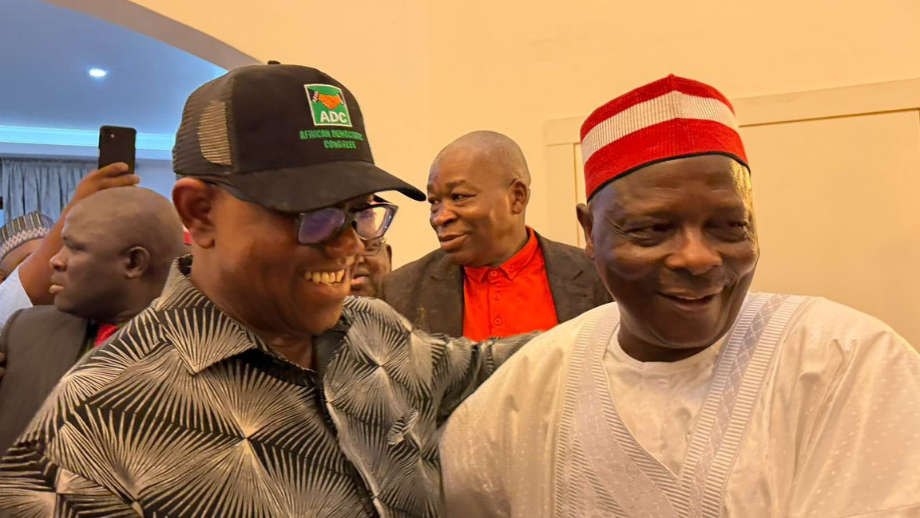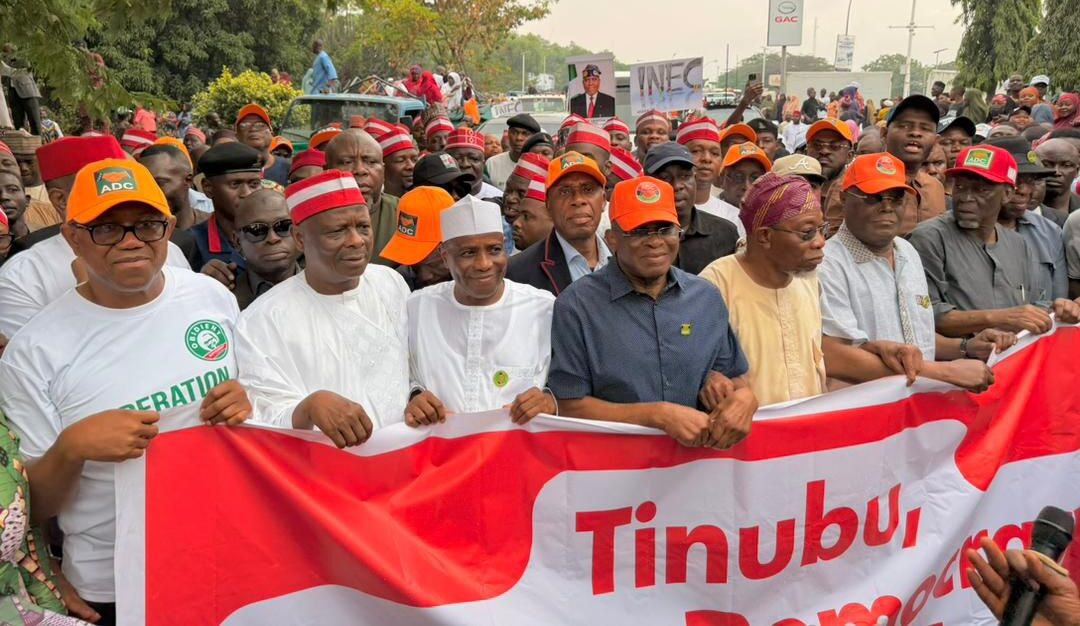
Prominent members of the African Democratic Congress (ADC) led a “Save Nigeria Democracy” protest to the headquarters of the Independent National Electoral Commission (INEC) in Abuja on Wednesday, accusing the electoral body of partisan bias favouring the ruling All Progressives Congress.
The demonstration began at the Maitama Roundabout and proceeded to INEC’s office, where former vice‑president Atiku Abubakar, former presidential candidate Peter Obi, former Rivers State governor Rotimi Amaechi, former Kano State governor Rabiu Kwankwaso, former Senate president David Mark, ex‑Osun State governor Rauf Aregbesola and former Sokoto State governor Aminu Tambuwal marched alongside hundreds of supporters and members of the Kwankwasiyya movement.
Details of the Demonstration
Protesters carried placards with slogans such as “Hands off our courts” and “Judges must give justice,” signalling broader concerns over the independence of Nigeria’s institutions. Amaechi addressed the crowd from a van as the procession moved through the capital, while Atiku shared video clips on his X account, stating, “Myself and other leaders of the ADC are peacefully protesting against the partisanship of the electoral umpire.” He added that the protest was intended to safeguard democracy and prevent “the enthronement of a dictatorship.”
Obi urged “well‑meaning Nigerians, lovers of democracy” to join the march, declaring, “We say NO to a one‑party system… to defend democracy in our land.” A video posted by photographer Esther Umoh showed Obi, Kwankwaso and other ADC chieftains holding a banner that read, “Tinubu, let our democracy breathe.” Tambuwal echoed the sentiment on X, describing the protest as “driven by our collective commitment to safeguarding Nigeria’s democracy and ensuring that our electoral process remains credible, fair, and transparent.”
Political Context and Party Crisis
The protest occurred against a backdrop of internal turmoil within the ADC. In early April, INEC announced that it would not recognise the factions led by Nafiu Bala and David Mark, citing a Court of Appeal judgment delivered on 12 March. Bala had previously attended a ceremony that appeared to endorse the Mark‑led leadership, but he later claimed that no formal agreement had been reached to appoint Mark and his colleagues as party leaders.
Bala accused former ADC national chairman Ralph Nwosu of imposing the Mark‑led executives without proper consultation. On 9 April, state chairmen of the ADC publicly rejected both the Bala and Mark factions, accusing them of hijacking the party and supporting INEC’s decision to de‑recognise their leadership. In response, the Mark‑led executives alleged that INEC’s actions were intended to undermine Nigeria’s democracy and to benefit the APC.
Reactions and Implications
The gathering attracted significant media attention, highlighting the growing distrust between opposition parties and the electoral commission. Observers noted that the presence of senior political figures from multiple regions underscored a cross‑regional concern about the perceived erosion of democratic norms. The protest also served as a platform for the ADC to reaffirm its commitment to free and fair elections ahead of the 2027 general elections, which the party has pledged to contest on its own platform.
While the demonstrators maintained a peaceful stance, the event intensified calls for INEC to demonstrate impartiality and transparency in its operations. Analysts suggested that continued friction between the ADC and INEC could influence voter confidence and potentially affect turnout in future elections.
The ADC’s leadership indicated that the protest would be the first of several actions aimed at pressuring INEC to address the concerns raised. Future engagements are expected to include legal challenges, public forums and additional peaceful demonstrations, all intended to preserve the integrity of Nigeria’s democratic processes.